Week 0. introductions, methods, and challenges for historians
Secondary source
–Ian Angus, “When Did the Anthropocene Begin…And Why Does It Matter?” Monthly Review 67, no. 4 (2015): 39–54.
–Ian Angus, “Has the Anthropocene been cancelled?” in Metabolic Rifts: Capitalism's Assault on the Earth System. Monthly Review Press, 2026, 232–37.
Week 1. global environmental history
Secondary source
–Sam White, “Climate Change in Global Environmental History” in A Companion to Global Environmental History, eds. J. R. McNeill and Erin Stewart Mauldin. Wiley-Blackwell, 2012.
Primary source
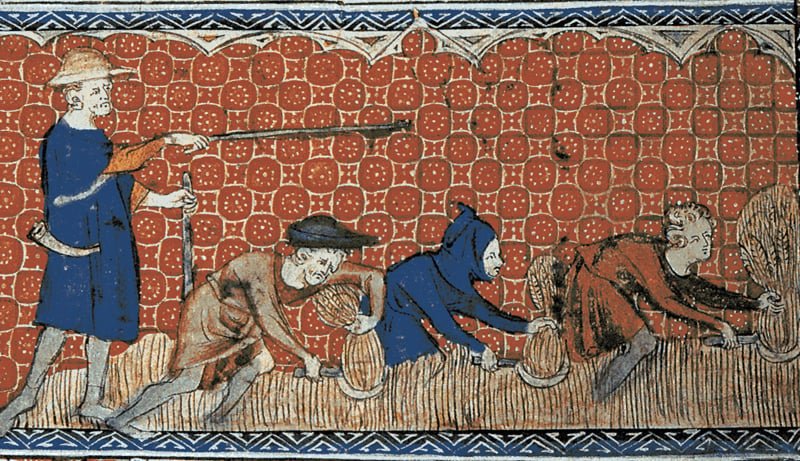
–Johannes de Trokelowe, ”The Great Famine of 1315.” 1315, England.
Supplemental
–Mark Bould, The Anthropocene Unconscious: Climate, Catastrophe, Culture. Verso, 2021.
–John Bellamy Foster, Capitalism in the Anthropocene: Ecological Ruin or Ecological Revolution. New York University Press, 2022.
–J.R. McNeill, “Observations on the Nature and Culture of Environmental History,” History and Theory 42 (2003): 5-43.
Week 2. climate, environment, and disease in the fourteenth-century
Secondary source
–J.R. McNeill, “Biological exchange in global environmental history” in A Companion to Global Environmental History, eds. J. R. McNeill and Erin Stewart Mauldin. Wiley-Blackwell, 2012.
–Monica Green, “A New Definition of the Black Death: Genetic Findings and Historical Interpretations.” De Medio Aevo 11, no. 2 (2022): 139-55.
Primary source
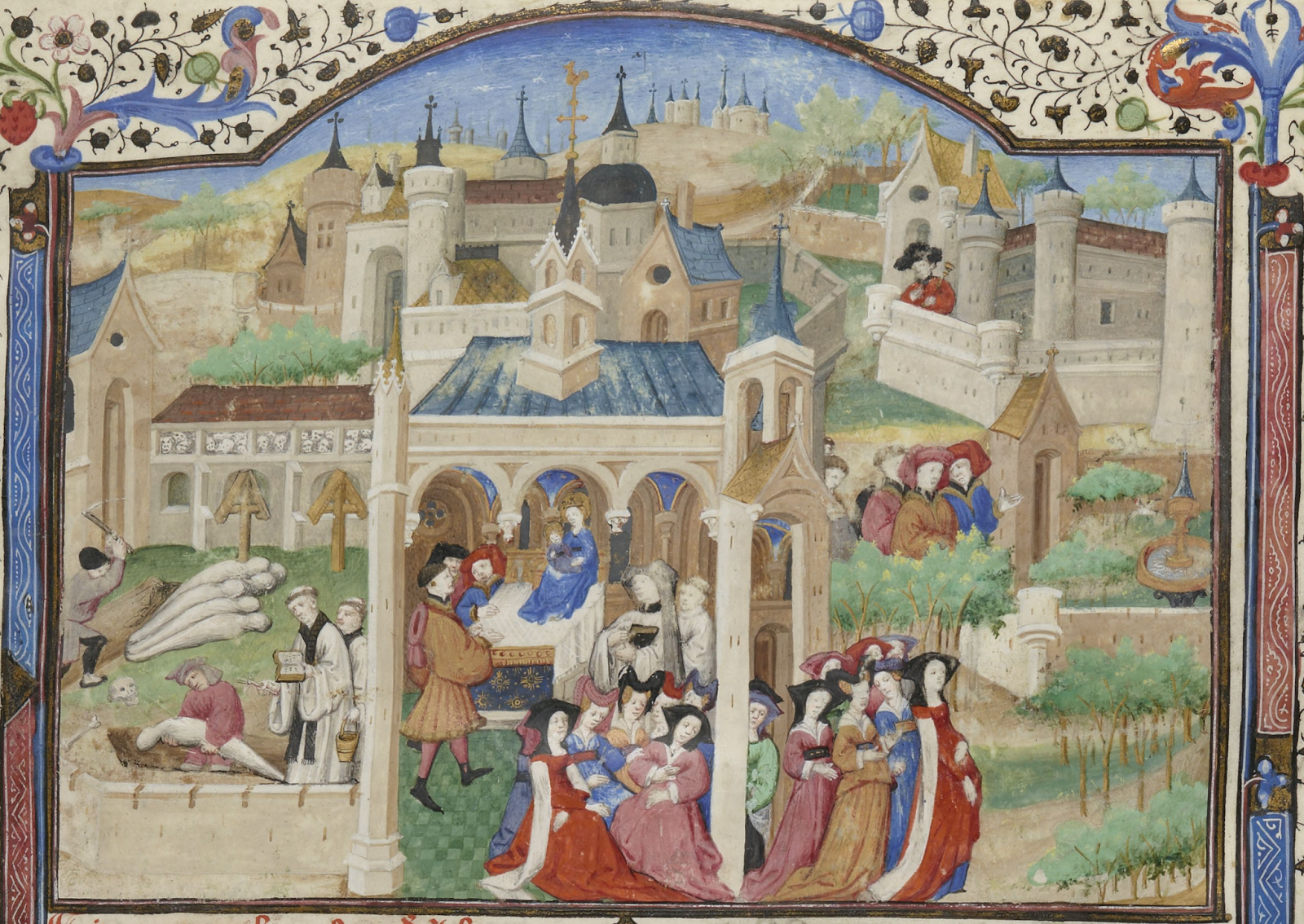
–Giovanni Boccaccio, introduction to The Decameron, “The onset of the Black Death,” 1349-1353. Florence.
–Ibn Battuta, Travels in Asia and Africa 1325-1354, “The Plague of 1348 in Damascus.” 1348. Damascus.
–Ibn al-Khatib, selections from, A Useful Book for those Inquiring about the Appalling Illness, 1362. Granada.
Supplemental
–Bruce Campbell, “The inhibiting environment and Latin Christendom's late-medieval demographic and economic contraction” in The Great Transition: Climate, Disease and Society in the Late-Medieval World. Cambridge University Press, 2016.
–Eric Chaney, “Medieval Origins: A Review Essay on Campbell’s The Great Transition.” Journal of Economic Literature 56, no. 2 (2018): 643-656.
–Monica Green, “The Four Black Deaths,” The American Historical Review, Vol. 125(5) 2020: 1601-1631.
–Monica Green ed., Pandemic disease in the Medieval World: Rethinking the Black Death, The Medieval Globe, vol. 1. Kalamazoo: Arc Humanities Press, 2015.
Week 3: geography, maps, and the climate in the Torrid Zone
Secondary source
–Hugh Cagle, “Beyond the Senegal: Inventing the Tropics in the Late Middle Ages,” Journal of Medieval Iberian Studies 7 (2015): 197–217.
–Alfred Crosby, “The Fortunate Isles.” in Ecological Imperialism: The Biological Expansion of Europe, 900–1900, 70–103. Cambridge University Press, 1986.
Primary source
–Leo Africanus, “A Geographical History of Africa,” 1600.
Supplemental
–Karen Ordahl Kupperman, “The Puzzle of the American Climate in the Early Colonial Period,” The American Historical Review 87, no. 5 (1982): 1262- 1289.
Rebecka Earle, “Climate, travel and colonialism in the early modern world” in Governing the Environment in the Early Modern World, eds. Sara Miglietti and John Morgan. London: Routledge, 2017.
–Sam White, "Unpuzzling American Climate/ New World Experience and the Foundations of a New Science” Isis 106, no. 3 (2015): 544–566.
–Denis E. Cosgrove, “Images of Renaissance Cosmography” in The History of Cartography, Volume Three: Cartography in the European Renaissance, eds by David Woodward, University of Chicago Press, 2007.
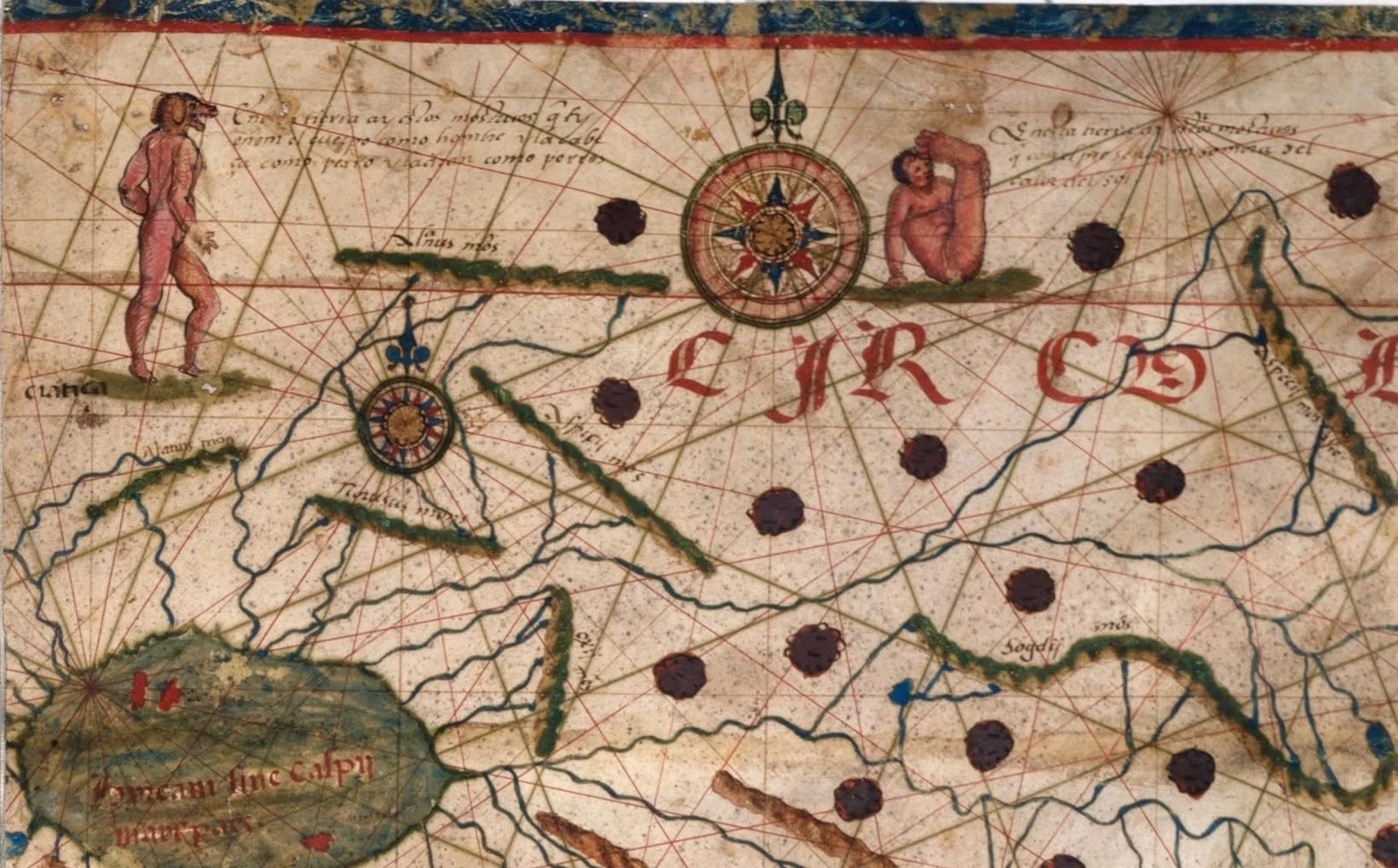
–Chet Van Duzer, Sea Monsters on Medieval and Renaissance Maps.
Week 4: bodies and disease in the Atlantic world
Secondary source
–Surekha Davies, “Monstrous ontology and environmental thinking: Patagonia’s Giants” in Renaissance Ethnography and the Invention of the Human: New Worlds, Maps and Monsters. Cambridge University Press, 2016.
–José Pardo-Tomás, “Antiguamente Vivían Más Sanos Que Ahora”. Explanations of the Native Mortality in the “Relaciones Geográficas de Indias.” in Medical Cultures of the Early Modern Spanish Empire, ed. John Slater, María Luz López-Terrada, and José Pardo-Tomás. Ashgate, 2014.
Primary source
–Selections from Juan de Cárdenas, Problemas y Secretos Maravillosas, Mexico City. 1592.
–Instructions to the Relaciones Geográficas, Madrid. 1577.
Supplemental
–David S. Jones, “Virgin Soils Revisited” The William and Mary Quarterly 60, no. 4 (2003): 703–42.
–William Eamon. “Cannibalism and Contagion: Framing Syphilis in Counter-Reformation Italy.” Early Science and Medicine 3, no. 1 (1998): 1–31.
–Alfred Crosby, “The Early History of Syphilis: A Reappraisal.” American Anthropologist 71, no. 2 (1969):218-227.
Week 5: gold and silver
Secondary source
–Allison Bigelow, “Gold, Silver, Power, and Abuse: The Incorporation and Erasure of Indigenous Knowledges in Spanish Colonial Metalwork” in Silver: Transformational Matter, ed. Helen Hills. British Academy / Oxford University Press, 2024.
Primary source
–Selections on the conditions of the mines at Potosí
Supplemental
–Allison Bigelow. “Imperial projecting in Venezuela and Virginia.” Early American Studies 16, no. 1 (2018): 91–123.
–Helen Hills “Blind Spots: The Future of Art History and the Ecology of Early Modern Silver” Arts 15, no. 5 (2026).
–Julio Aguilar, “Water for the Monarchy of the World: Mitayos and Maestros of Colonial Potosí Hydraulic Works” n Potosí in the Global Silver Age (16th–19th Centuries), eds. Rossana Barragán and Paula C. Zagalsky. Brill, 2023.
–Kris Lane, The Silver City That Changed the World. University of California Press, 2019.
Week 6: porcelain, wood, and the Manilla Galleon
Secondary source
–Daniel Suebsman, "Chinese Export Porcelain of the Ming Dynasty,” in Embodied Dependencies and Freedoms: Artistic Communities and Patronage in Asia, ed. Julia A. B. Hegewald. De Gruyter, 2023. 97–120.
–Greg Bankoff, “Almost an Embarrassment of Riches: Changing Attitudes to the Forests in the Spanish Philippines,” in A History of Natural Resources in Asia: The Wealth of Nature, ed. Greg Bankoff and Peter Boomgaard. Palgrave Macmillan, 2007. 103–8.
–Greg Bankoff, “Wood for War: The Legacy of Human Conflict on the Philippine Forests, 1565–1945,” in War and the Environment: Military Destruction in the Modern Age, ed. Charles E. Closmann. A&M University Press, 2009. 32–48.
Primary source
–Gazetteers on the porcelain industry at Fuliang
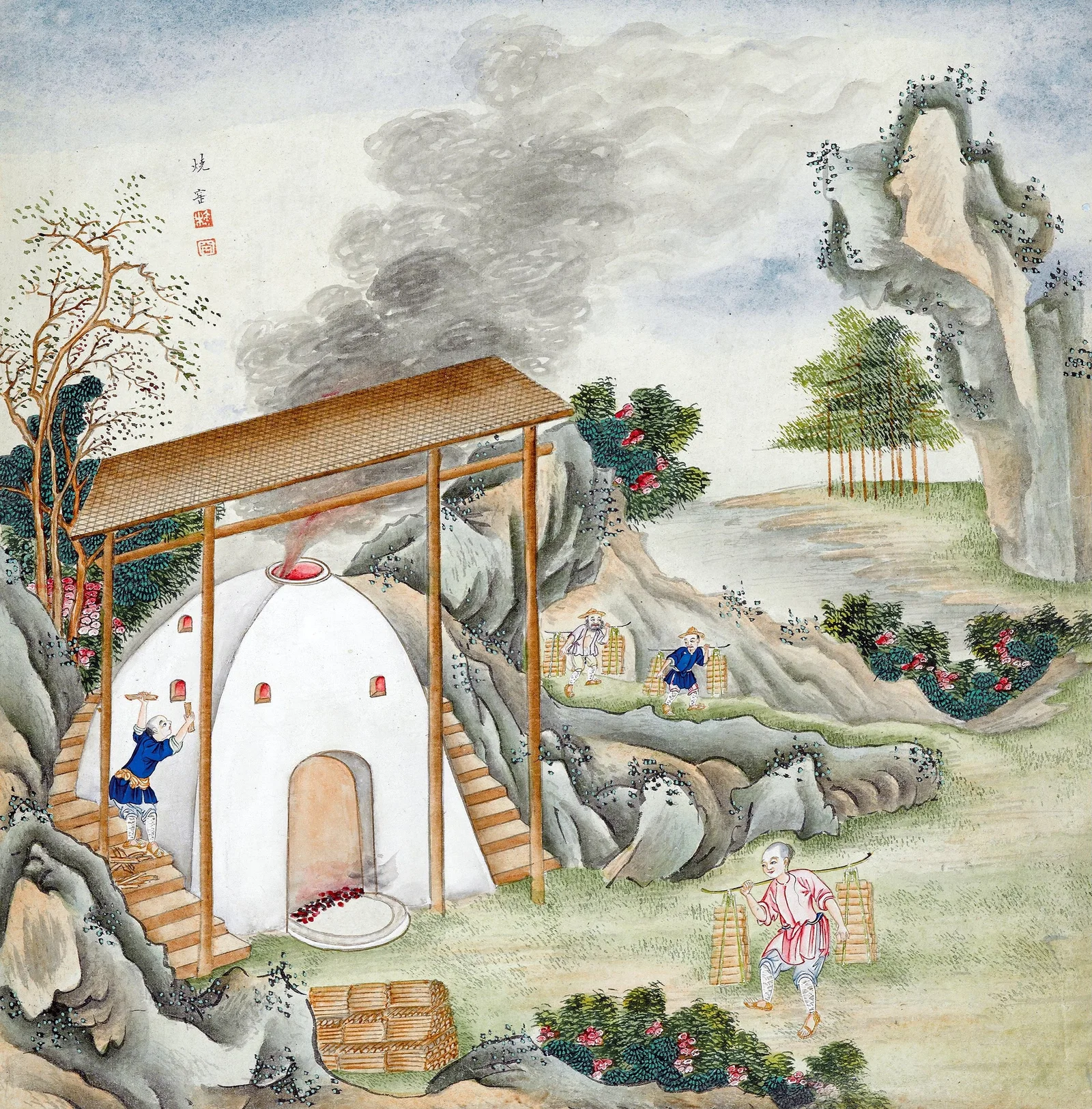
–Selections on wood firing from by Chu Yen, Description of Chinese Pottery and Porcelain, 1767.
Supplemental
–Robert Marks, “Agriculture is the Foundation” in Tigers, Rice, Silk, and Silt: Environment and Economy in Late Imperial South China. Cambridge University Press, 1998.
–Frederic Wakeman. "China and the Seventeenth-Century Crisis." Late Imperial China 7, no. 1 (1986): 1-26.
–Hsu Wen-Chin. "Social and Economic Factors in the Chinese Porcelain Industry in Jingdezhen During the Late Ming and Early Qing Period, ca. 1620-1683,"urnal of the Royal Asiatic Society of Great Britain & Ireland 120, no. 1 (1988): 135–59.
–Stephen Acabado. “Zones of Refuge: Resisting Conquest in the Northern Philippine Highlands Through Environmental Practice,” Journal of Anthropological Archaeology 50 (2018): 180-196.
–Amano, Hideyuki, and Greg Bankoff. “Archaeological and historical insights into the ecological impacts of pre-colonial and colonial introductions into the Philippine Archipelago” The Holocene 30, no. 11 (2020): 1621–1630.
Week 7: bioprospecting and hunting spices
Secondary source
–Paula de Vos, “The Science of Spices: Empiricism and Economic Botany in the Early Spanish Empire” Journal of World History 17, no. 4 (2006): 399–427.
–Genie Yoo, “Cloves: the Spice that Enriched Empires,” JSTOR Daily, September 20, 2024.
Primary source
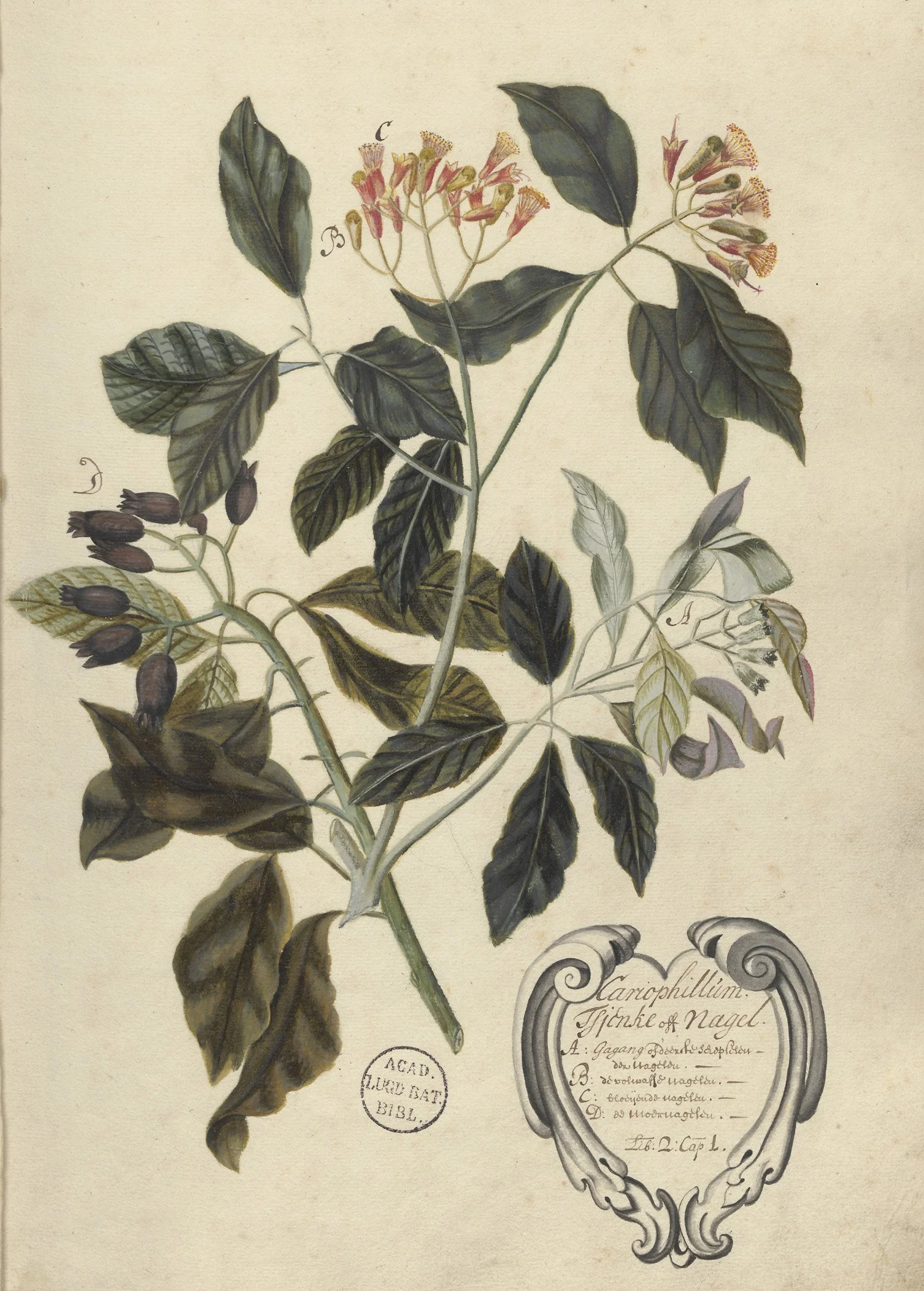
–Selection on the use of cloves and nutmeg from Georgius Everhardus Rumphius’ The Ambonese Herbal; visual analysis exercise on paintings of cloves and nutmeg
–Anthoni van Leeuwenhoek, letter on clove and mace
Supplemental
–Robert A. Voeks and Charlotte Greene, "God’s Healing Leaves: The Colonial Quest for Medicinal Plants in the Torrid Zone," Geographical Review 108, no. 4 (2018): 545-565
–Genie Yoo, “Wars and wonders: the inter-island information networks of Georg Everhard Rumphius,” The British Journal for the History of Science 51, no. 4 (2018): 559-584.
–James Tracy, “Dutch and English trade to the East: the Indian Ocean and the Levant to 1700,” in The Construction of a Global World, 1400–1800 CE, ed. Jerry H. Bentley, Sanjay Subrahmanyam, and Merry E. Wiesner-Hanks, vol. 6 of The Cambridge World History.Cambridge University Press, 2015.
–Claudia Shnurmann, “‘Wherever profit leads us, to every sea and shore…’ The VOC, the WIC, and Dutch Methods of Globalization in the Seventeenth Century,” Renaissance Studies 17, no. 3 (2003): 474–493.
Week 8: cash crops and slave labor in the Atlantic basin
Secondary source
–Jason W. Moore, “Sugar and the Expansion of the Early Modern World-Economy: Commodity Frontiers, Ecological Transformation, and Industrialization,” Review (Fernand Braudel Center) 23, no. 3 (2000): 409–433.
–Judith A. Carney, “Subsistence in the Plantationocene: dooryard gardens, agrobiodiversity, and the subaltern economics of slavery,” The Journal of Peasant Studies 48, no. 4 (2021): 824–845.
Supplemental
–Jason W. Moore, Madeira, Sugar, and the Conquest of Nature in the "First" Sixteenth Century, Part I: From 'Island of Timber' to Sugar Revolution, 1420–1506." Review (Fernand Braudel Center) 32 no. 4 (2009): 345–90.
–Jason W. Moore “Madeira, Sugar, and the Conquest of Nature in the 'First' Sixteenth Century, Part II: From Regional Crisis to Commodity Frontier, 1506–1530.” Review (Fernand Braudel Center) 33, no. 1 (2010): 1–24
–Marco Meniketti, "Sugar Mills, Technology, and Environmental Change: A Case Study of Colonial Agro-Industrial Development in the Caribbean," The Journal of the Society for Industrial Archeology 32, no. 1 (2006): 53-80/
–Laura Hollsten, "Controlling Nature and Transforming Landscapes in the Early Modern Caribbean." Global Environment 1, no. 1 (2008): 80–113.
–Keith Pluymers, "Deforestation and Preservation in Early Barbados,” in No Wood, No Kingdom: Political Ecology in the English Atlantic, University of Pennsylvania Press, 2021.
Week 9: gender, nature, and rhetorics of expansion
Secondary source
–Carolyn Merchant, “Secrets of Nature: The Bacon Debates Revisited,” Journal of the History of Ideas 69, no. 1 (2008): 147-162.
Primary sources
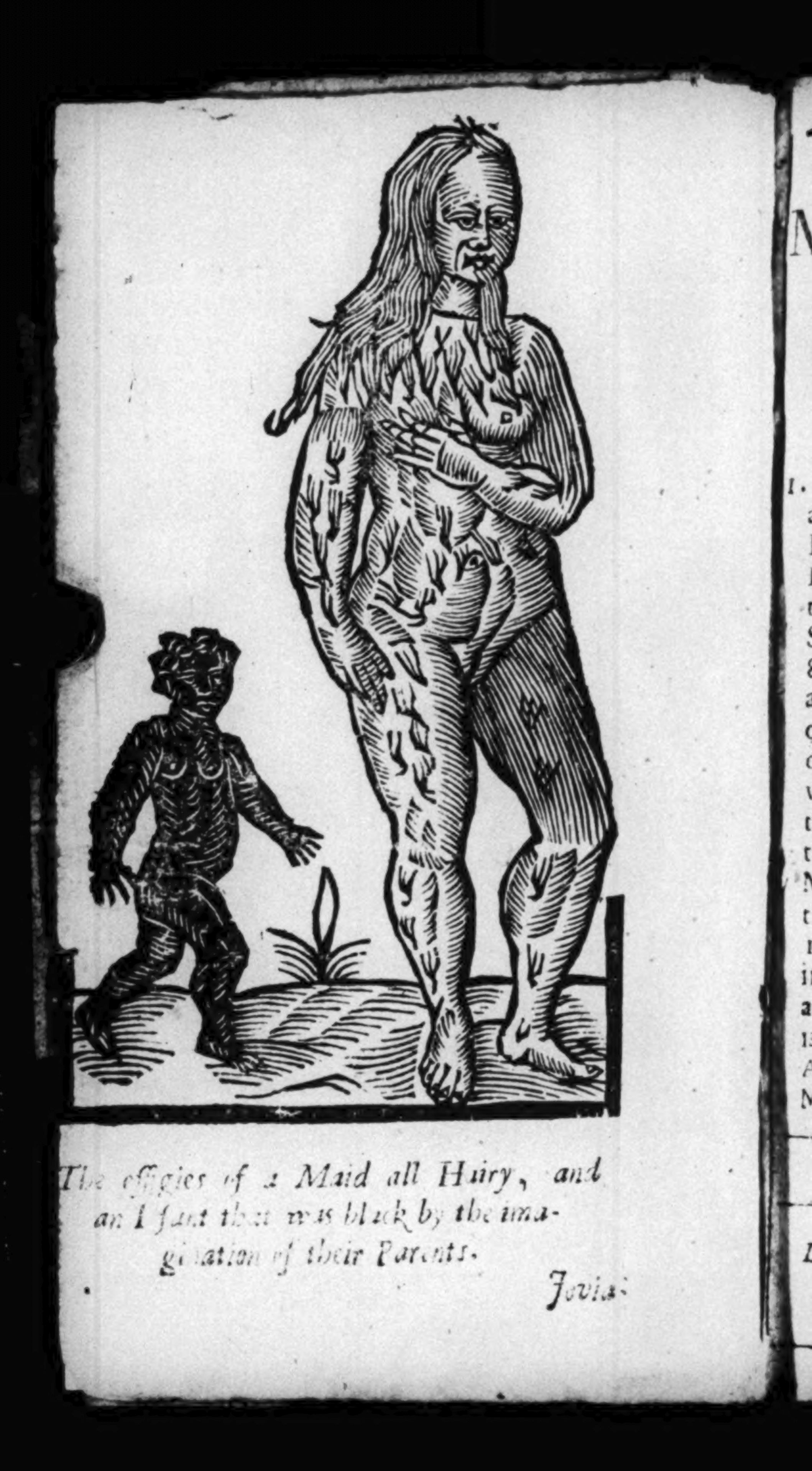
–Selections from Ambroise Paré, On Monsters and Marvels, 1573.
–Selections from Microcosmographia: A Description of the Body of Man. Helkiah Crooke, 1618.
–Selections from Observations in Midwifery, Percivall Willughby, 1670.
Supplemental
–Katherine Park, “Anatomy and Empire,” in Secrets of Women: Gender, Generation, and the Origins of Human Dissection. Zone Books, 2006.
–Geoffrey Parker, “Crisis and Catastrophe: The Global Crisis of the Seventeenth Century Reconsidered,” American Historical Review 113 (2008): 1053- 1079.
Week 10: conclusions, looking forward
Secondary source
–Ivonne de Valle, “From José de Acosta to the Enlightenment: Barbarians, Climate Change, and (Colonial) Technology as the End of History,” Eighteenth-Century Studies 47, no. 1 (2013): 435-454.
–Dagomar Degroot, “Did the Spanish Empire Change Earth’s Climate?” storical Climatology, February 29, 2016.
–Dagomar Degroot, "Is Climate Change Behind the Syrian Civil War?" Historical Climatology, July 8, 2015.
Supplemental
–Deborah McGregor. “Coming Full Circle: Indigenous Knowledge, Environment, and Our Future.” American Indian Quarterly 28, no. 3/4 (2004): 385–410.