Week 0. introductions, methods, and challenges for historians
Secondary source
–Eric Moses Gurevitch, “How Not to Tell the History of Science” Boston Review, Feb.22, 2023
Week 1: Iberian history and the first 50 years of colonization
Secondary source
–Slater and López-Terrada, "Being Beyond: The Black Legend and How We Got Over It." Histories of Science 55, no. 2 (2017): 148–66.
Supplemental
–Lorraine Daston and Katherine Park, “Introduction: the Age of the New” in Early Modern Science. Cambridge University Press, 2016.
Week 2: Mesoamerican and Incan histories
Secondary source
–Kathryn Burns, “Introduction” from Into the Archive: Writing and Power in Colonial Peru. Duke University Press, 2010.
–Kelly S. McDonough, “Science in Book XI of the Florentine Codex: Embodied Relationality and Guidance for Good Living.” in Indigenous Science and Technology: Nahuas and the World Around Them. University of Arizona Press, 2024.
Primary source
–Selections from the Florentine Codex
Supplemental
–Seán Thomas Kane, “A Sloth in the First French Colony in the Americas,” Terrae Incognitae 57, no. 3 (2025): 284-298.
–Sabine Hyland, Sarah Bennison and William P. Hyland, “Khipus, Khipu Boards, and Sacred Texts: Toward a Philology of Andean Knotted Cords," Latin American Research Review 56, no. 2 (2021): 400–416.
–remained of Kathryn Burns, Into the Archive: Writing and Power in Colonial Peru. Duke University Press, 2010.
–Camilla Townsend, Fifth Sun: A New History of the Aztecs. Oxford University Press, 2019.
Week 3: climate and cosmography
Secondary source
–Surekha Davies, “Monstrous ontology and environmental thinking: Patagonia’s Giants” in Renaissance Ethnography and the Invention of the Human: New Worlds, Maps and Monsters. Cambridge University Press, 2016.
Primary source
–Selections from Juan de Cárdenas Problemas y Secretos Maravillosos, Mexico City. 1592.
Supplemental
–Karen Kupperman, “Fear of Hot Climates,” The William and Mary Quarterly 41 (1984): 213–40.
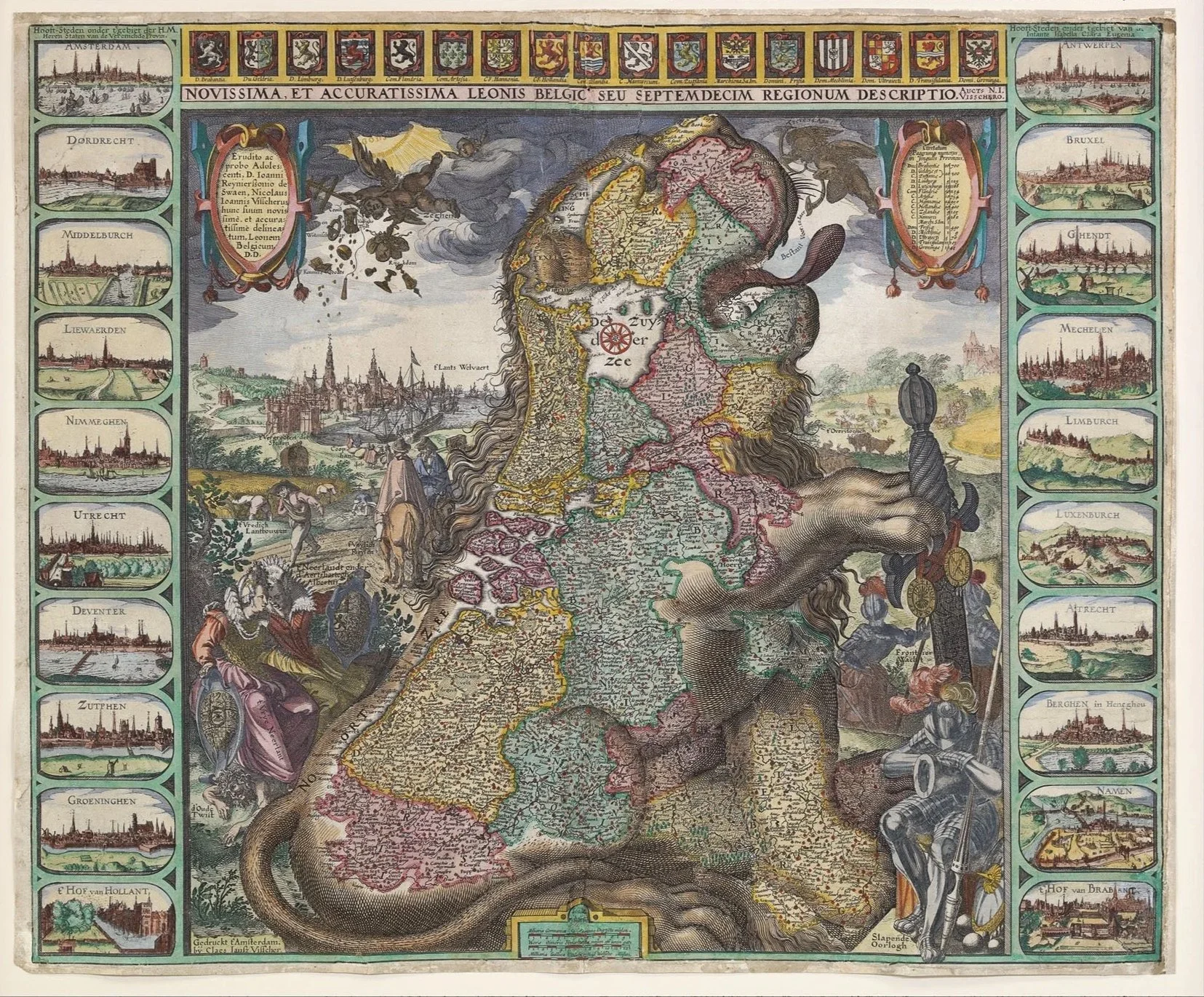
–Denis E. Cosgrove, “Images of Renaissance Cosmography” in The History of Cartography, Volume 3: Cartography in the European Renaissance, ed. by David Woodward. University of Chicago Press, 2007.
–Rebecka Earle, “Climate, travel and colonialism in the early modern world” in Governing the Environment in the Early Modern World: Theory and Practice, ed. Sara Miglietti and John Morgan, Routledge, 2017.
–Sam White, “Sam White, "Unpuzzling American Climate/ New World Experience and the Foundations of a New Science"Isis 106, no. 3 (2015): 544-566.
Week 4: maps and studying space
Secondary source
–Barbara Mundy, "Mapping Babel: A Sixteenth-Century Indigenous Map from Mexico” The Appendix 1, no. 4 (2013): 10-15
–Antonio Sánchez Martínez and José Pardo-Tomás, “Between Imperial Design and Colonial Appropriation: The Relaciones Geográficas de Indias and Their Pinturas as Cartographic Practices in New Spain,” Bulletin for Spanish and Portuguese Historical Studies 39, no. 1 (2014)
Primary source
–Instructions from the Relaciones Geograficas, Madrid. 1577.
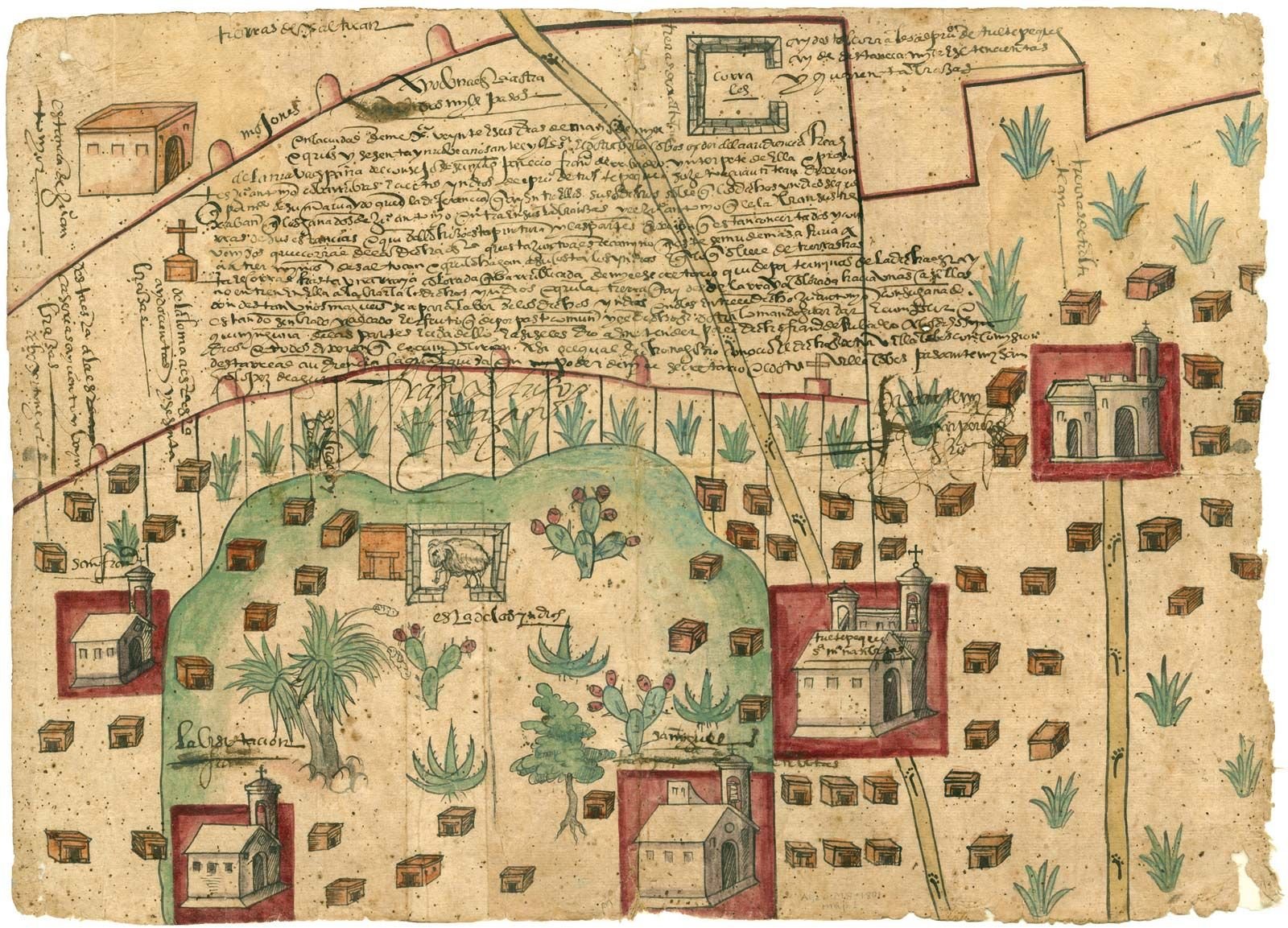
–Maps from Relaciones Geográficas
Supplemental
–Maria Portuondo, Secret Science: Spanish Cosmography and the New World. University of Chicago press, 2009.
–Henri Lefebvre, The Production of Space. Wiley-Blackwell, 1991.
Week 5: healing, medicine, and curanderos
Secondary source
–Carlos Viesca Treviño, "Curanderismo in Mexico and Guatemala: Its Historical Evolution from the Sixteenth to the Nineteenth Century," in Mesoamerican Healers, ed. Brad R. Huber and Alan R. Sandstrom. Austin: University of Texas Press, 2001.
–Martha Few, “Medical Mestizaje and the Politics of Pregnancy in Colonial Guatemala, 1660–1730,” in Science in the Spanish and Portuguese Empires, 1500–1800, ed. Daniela Bleichmar, Paula De Vos, Kristin Huffine, and Kevin Sheehan. Stanford University Press, 2009.
Primary source
–Selections from Juan de Cárdenas, Problemas y Secretos Maravillosas on witches, Mexico City, 1592.
–Selections from Chimalpahin, writing of the 1612 in response to conspiracy of uprising, The Annals of His Time.
Supplemental
–Gabrielle Vaile, “The Serpent Within: Birth Rituals and Midwifery Practices in Pre-Hispanic and Colonial Mesoamerican Cultures” Ethnohistory 66, no. 4 (October 2019): 689–719.
–Irene Silverblatt, “The Evolution of Witchcraft and the Meaning of Healing in Colonial Andean Society” Culture, Medicine and Psychiatry 7, no. 4 (1983): 413-427.
Week 6: public health and hospitals
Secondary source
–José Pardo Tomás, “Conversion Medicine: Communication and Circulation of Knowledge in the Franciscan Convent and College of Tlatelolco, 1527-1577” Quaderni Storici 48, no. 142 (1) (2013): 21–41.
–Pablo Gómez, “Hospitals and Public Health in the Sixteenth- Century Spanish Caribbean” in The Spanish Caribbean and the Atlantic World in the Long Sixteenth Century, ed. Ida Altman and David Wheat. University of Nebraska Press, 2019.
Primary source
–Alonso Molina, selections from Nahua confraternities
Supplemental
–Pardo Tomas, “The Convent as a Space for Novohispanic Medical Culture,” in The Complexity of Hispanic Religious Life in the 16th–18th Centuries, ed. Doris Moreno. Brill, 2020.
–Martha Few, “Medical Humanitarianism and Smallpox Inoculation in Eighteenth-Century Guatemala” Historical Social Research/ Historische Sozialforschung 37, no. 3 (2012): 303-317.
–Paul Ramirez, Enlightened Immunity: Mexico's Experiments with Disease Prevention in the Age of Reason. Stanford University Press, 2018.
Week 7: botany and plants
Secondary source
–Daniella Bleichmar, "Books, bodies, and fields: sixteenth-century transatlantic encounters with New World Materia Medica” in Colonial Botany: Science, Commerce, and Politics, eds. Londa Schiebinger and Claudia Swan, University of Pennsylvania Press, 2005.
–Paula S. De Vos, “The Science of Spices: Empiricism and Economic Botany in the Early Spanish Empire,” Journal of World History 17, no. 4 (2006).
Primary source
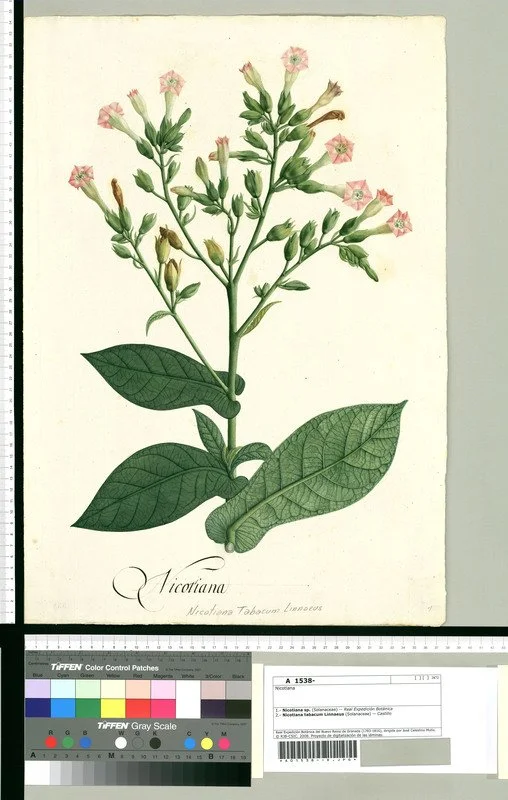
–Images from the eighteenth–century Mutis expedition to New Granada
Supplemental
–Samir Boumediene, "Society of Jesus and the introduction of exotic materia medica into Europe,” in Cultural Worlds of the Jesuits in Colonial Latin America, ed. Linda A. Newson, University of London Press, 2020.
Week 8: pharmacy and making medicines
Secondary source
–Robert A. Voeks and Charlotte Greene, "God's Healing Leaves: The Colonial Quest for Medicinal Plants in the Torrid Zone," Geographical Review 108, no. 4 (2018): 545–65.
–Paula De Vos, "Galenic Pharmacy and the Nature of the Nahuas" in Compound Remedies: Galenic Pharmacy from the Ancient Mediterranean to New Spain. University of Pittsburgh Press, 2020.
Primary source
–Selections from Francisco Hernandez, Quatro Libros, 1615.
–Selections from the Badianus Codex
Supplemental
–Paula de Vos, "Methodological challenges involved in compiling the Nahua pharmacopeia.” in Compound Remedies.
–Linda Newsom, “Alchemy and Chemical Medicines in Early Colonial Lima, Peru” bix 67, no. 2 (2020): 107-34.
Week 9: astronomy and astrology
Secondary
–David Carrasco, "Star Gatherers and Wobbling Suns: Astral Symbolism in the Aztec Tradition." History of Religions 26, no. 3 (1987): 277–294
–"Astronomy and Its Role in Ancient Mesoamerica." Proceedings of the International Astronomical Union 5, no. S260 (2011): 87–95.
–Nydia Pineda de Ávila and Thomás A. S. Haddad, "Writing the History of the New World into Universal History." Varia Historia 38, no. 78 (2022): 659-692.
Primary source
–Enrico Martínez, selections from Repertorio de los tiempos y historia natural desta Nueva España, 1606.
–Carlos de Sigüenza y Góngora, selections from Manifiesto filosófico contra los cometas. 1681.
Supplemental
–Jorge Cañizares Esguerra, “New World, New Stars: Patriotic Astrology and the Invention of Indian and Creole Bodies in Colonial Spanish America, 1600-1650.” The American Historical Review 104, no. 1 (1999): 33–68.
–Orozco-Echeverri, “Popular Science as Knowledge: Early Modern Iberian-American Repertorios De Los Tiempos.” Galilaeana 20, no. 1 (2023): 34–61.
–Karr, "Constructions both sacred and profane, serpents, angels, and pointing fingers in Renaissance books" Yale University Library Gazette 78, no. 3/4 (2004): 101–127.
Week 10: medical and scientific mestizaje, conclusions
Secondary
–Pablo F. Gómez, "Domingo de la Ascensión and the Criollo Healing Culture of the Seventeenth-Century Caribbean” in The Gray Zones of Medicine: Healers and History in Latin America, ed. Diego Armus and Pablo F. Gómez. University of Pittsburgh Press, 2021.
Supplemental
–Jacqeuline Holler, “Mixing/Medicines: Healing Exchanges among Women in Early Colonial New Spain (1530–1650)” Gender & History 33, no. 3 (2021): 632-651.
–Timothy Knowlton and Gabrielle Vail, “Hybrid Cosmologies in Mesoamerica: A Reevaluation of the Yax Cheel Cab, a Maya World Tree” Ethnohistory 57, no. 4 (2010): 709-739.